Wolverhampton Property Market:How Q2 2026 Compared with t...
As an agent in the Wolverhampton property market, we believe it is important to offer local homeowners a balanced and realistic view

The Wolverhampton rental market has experienced significant growth over the last five years, with average monthly rents increasing from £724 in 2021 to £1,012 in 2026. That represents a 39.8% increase, substantially outperforming both the UK average rent growth of 25.5% and the 26.6% rise across the West Midlands.
For tenants, this means higher monthly housing costs and a greater focus on affordability. For landlords and buy-to-let investors, it presents both opportunities and challenges as demand remains strong while regulation and operating costs continue to increase.
How Have Wolverhampton Rents Changed?
Average monthly rents have increased steadily over the last five years.
This 39.8% increase reflects a market where demand has consistently outpaced supply.
Although rents have risen sharply, the pace of growth is now beginning to normalise. Nationally, around 31% of rental listings have seen asking rent reductions during 2026, compared with 24% a year earlier. This suggests tenants are becoming more price conscious rather than demand disappearing altogether.
The rental market remains healthy, but achieving the highest possible rent now requires sensible pricing, quality presentation and realistic expectations.
Wolverhampton Rental Supply Remains Limited
Rental supply has improved but continues to lag behind tenant demand.
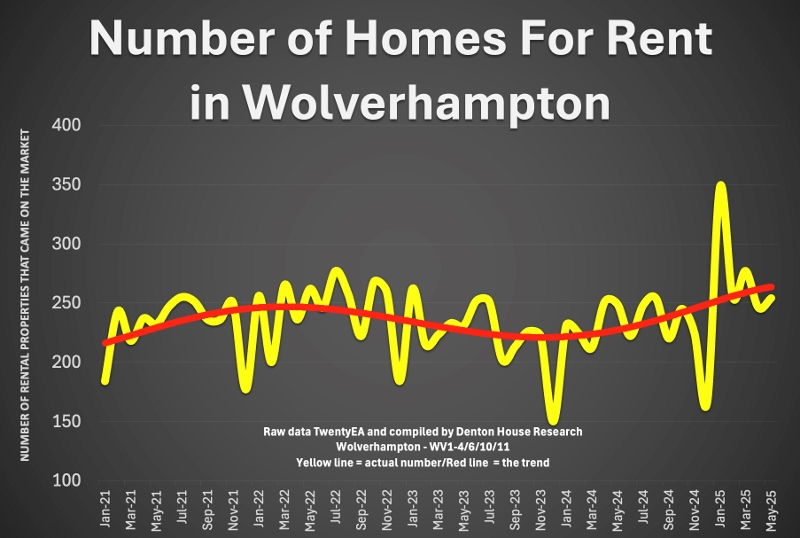
The average number of new rental properties coming onto the market each month across Wolverhampton (WV1-4, WV6, WV10 and WV11) has been:
Whilst more properties are becoming available, choice remains relatively limited and well-presented homes continue to let quickly.
The rental market also follows predictable seasonal patterns, with activity typically strongest during late spring and early autumn, while December remains the quietest period for new listings.
Is Demand for Rental Property in Wolverhampton Still Strong?
Yes.
The intense competition seen during 2022 and 2023 has eased slightly, but attractive homes in desirable locations continue to generate multiple enquiries.
One of Wolverhampton’s biggest advantages is affordability. Compared with many neighbouring towns and cities, tenants can often secure larger properties for less money, helping maintain consistent demand from young professionals, families, downsizers and long-term renters.
National rental availability remains more than 25% below pre-pandemic levels, and industry analysts estimate that an additional 50,000 rental homes are needed every year across the UK to restore supply.
Until that imbalance changes, rental values in cities such as Wolverhampton are likely to remain well supported.
Wolverhampton Rental Market Forecast for 2026
After several years of exceptional growth, rental inflation appears to be moderating rather than reversing.
Provided tenant demand remains healthy and rental supply does not increase significantly, average rents across Wolverhampton are expected to rise by around 2% to 3% during the remainder of 2026.
This represents a return to a more sustainable level of growth whilst still offering attractive returns for many property investors.
Is Buy-to-Let Still Worth It in Wolverhampton?
Despite higher costs and increasing regulation, Wolverhampton continues to offer opportunities for landlords prepared to take a long-term view.
The Challenges Facing Landlords
Rising Costs
Mortgage rates remain significantly higher than they were just a few years ago, while inflation has increased maintenance, repairs, insurance and compliance costs.
For many rental properties, ongoing management and upkeep now consume a substantial proportion of rental income before finance costs are even considered.
Higher Tenant Expectations
Today’s renters expect energy-efficient homes, reliable broadband, modern kitchens and well-maintained living spaces.
Many successful landlords are now prioritising long-term tenant retention rather than maximising every possible rent increase, recognising that lower void periods often produce better overall returns.
Taxation and Compliance
Changes to mortgage interest relief, reduced Capital Gains Tax allowances and increasing administrative responsibilities have made buy-to-let ownership more complex than it once was.
Making Tax Digital and additional reporting requirements continue to increase the burden on portfolio landlords.
Although some investors left the sector over recent years, recent market data suggests that trend has slowed considerably. During the first quarter of 2026, only 12.8% of homes coming onto the sales market had previously been rental properties, compared with 22.5% a year earlier, indicating that landlord exits have returned closer to historic levels.
The Changing Regulatory Landscape
The introduction of the Renters Rights Act and continuing discussions around future energy efficiency standards mean landlords must stay informed and plan ahead.
Owners of older rental properties may need to invest in improvements over the coming years to remain compliant and competitive.
Opportunities for Wolverhampton Buy-to-Let Investors
Whilst some landlords are selling, others continue to expand their portfolios.
More than 211,700 homes were purchased as buy-to-let investments across the UK during the last financial year, despite higher Stamp Duty costs.
Strong Tenant Demand
Wolverhampton benefits from excellent transport links, relatively affordable housing and a diverse tenant population.
Well-presented properties in desirable locations continue to attract consistent interest and experience relatively low void periods.
Improving Rental Returns
The strong rental growth seen since 2021 has improved yields across much of the city.
Landlords with little or no borrowing have benefited particularly from rising rental income, while leveraged investors can still achieve attractive returns where rents have kept pace with financing costs.
The Wolverhampton Rental Market in Summary
The private rented sector in Wolverhampton is undoubtedly more demanding than it was a decade ago, but it remains a resilient market with solid long-term fundamentals.
Tenant demand remains healthy, rental supply is still constrained and the city’s affordability continues to attract a broad range of renters.
Success increasingly depends on realistic pricing, professional management, well-maintained homes and a willingness to adapt to changing legislation and tenant expectations.
Whether you’re an experienced landlord, a first-time buy-to-let investor or simply wondering what your rental property could achieve in today’s market, understanding local trends is essential to making informed decisions.
The easy gains of previous years may have passed, but for landlords who invest wisely and manage their properties professionally, Wolverhampton continues to offer compelling long-term opportunities.


As an agent in the Wolverhampton property market, we believe it is important to offer local homeowners a balanced and realistic view
The Wolverhampton property market can often feel far more active than it really is.Every week, new For Sale boards appear outside homes
How Rare Are They and What Are They Worth? For some homebuyers, the kitchen is the deal maker. For others, it is