How Much Is My House Really Worth?
It’s probably the first question every homeowner asks when they’re thinking about selling: how much is my house actually wort...

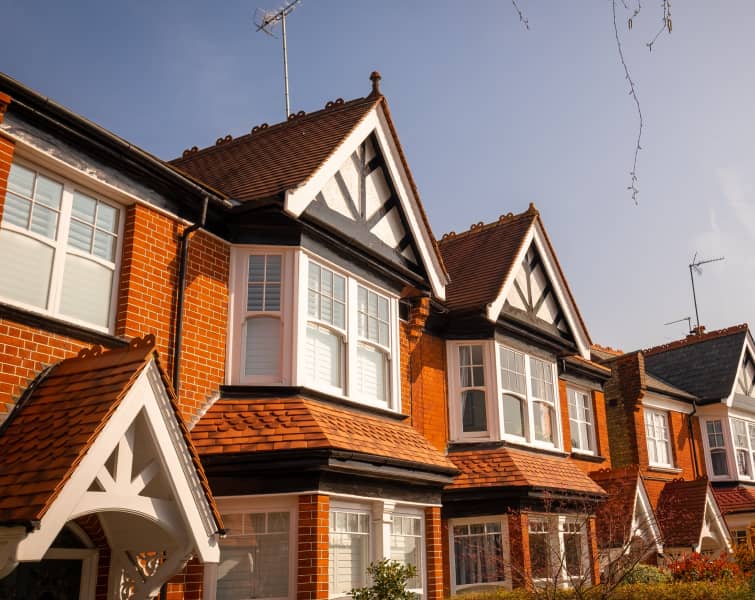
When homeowners in Wolverhampton think about what their property is worth, they usually consider its location, number of bedrooms, condition and garden.
Yet there is another detail worth paying attention to: the coloured chart on its Energy Performance Certificate (EPC). An EPC rates a home from A, the most energy efficient, to G, the least. It might seem less exciting than a new kitchen, but it raises a question that matters to homeowners, buyers and landlords alike.
What does this property cost to live in, rather than simply to buy?
The contrast in energy costs comes down to how effectively each property retains warmth.
An EPC Band A home functions like a highly efficient thermos; its advanced insulation, airtight construction and integrated renewable energy systems mean it requires very little power to maintain a comfortable temperature, keeping average annual energy bills to around £50 per month (for a typical 3 bed home). In contrast, an EPC Band G home acts more like a leaky bucket, losing heat through uninsulated walls, draughty windows, and outdated heating systems. Because the heating must run constantly just to fight off the chill, occupants face a massive financial penalty, with annual bills soaring to £350 per month for the exact same level of comfort.
As you can see, quite a difference!
We have been examining the average prices paid and the distribution of sales across EPC bands in Wolverhampton, covering WV1-4/6/10/11. Among the 37,368 transactions of second-hand homes (i.e. new homes excluded) with a recorded EPC rating in the last 12 years, the breakdown was:
EPC rating share of recorded Wolverhampton home sales and average price paid
• 245 homes have sold in Wolverhampton with an EPC rating of A. (0.7% of the sales, compared to the national average of 0.4%). The average price paid was £210,548.
• 3,016 homes have sold in Wolverhampton with an EPC rating of B. (8.1% of the sales, compared to the national average of 12.9%). The average price paid was £235,967.
• 9,752 homes have sold in Wolverhampton with an EPC rating of C. (26.1% of the sales, compared to the national average of 32.8%). The average price paid was £164,677.
• 17,776 homes have sold in Wolverhampton with an EPC rating of D. (47.6% of the sales, compared to the national average of 39.6%). The average price paid was £173,239.
• 5,622 homes have sold in Wolverhampton with an EPC rating of E. (15.0% of the sales, compared to the national average of 11.7%). The average price paid was £177,557.
• 787 homes have sold in Wolverhampton with an EPC rating of F. (2.1% of the sales, compared to the national average of 2.1%). The average price paid was £215,116.
• 170 homes have sold in Wolverhampton with an EPC rating of G. (0.5% of the sales, compared to the national average of 0.5%). The average price paid was £195,539.
Taken together, A and B Wolverhampton properties accounted for 8.7% of these sales (not very many). Yet if we were to look at A, B and C combined, that adds up to 34.8%. The remaining 65.2% were in bands D to G.
That gives us a different perspective on the Wolverhampton property market. Beyond what homes sell for, we can see the energy performance of the properties changing hands. However, these figures need careful interpretation as a higher average price in one band does not prove that the EPC rating caused that price.
Larger detached houses, smaller flats, modern developments and older terraces can sit in different bands and command very different values. Equally, the small number of sales in the highly energy efficient A band are most probably homes that were originally bought brand new in the last 10 years (as they are the only type of second-hand home with that rating), whilst those homes in the low energy efficient bands of F or G can tend to be properties that are 100+ years old (meaning they have solid walls (not cavity walls with insulation). Also, because of the low numbers, the average could be heavily influenced by one unusually expensive or inexpensive property.
These are useful clues about our local market, rather than a formula for valuing an individual home.
For Wolverhampton home buyers, the practical issue is affordability after moving day. Two similarly priced homes can place different demands on a household budget. Mortgage payments matter, but so do heating, hot water and the cost of any improvements needed. Energy prices fluctuate. Nevertheless, reducing the energy needed to keep a home comfortable can help households manage their exposure to those changes. An EPC is a starting point for that conversation, although actual bills also depend on occupancy, heating habits and tariffs.
For Wolverhampton homeowners considering selling, this creates an opportunity to prepare. Know your rating, understand the recommendations and keep evidence of improvements. Insulation, heating controls and other suitable measures may improve comfort and running costs, while giving buyers something tangible to consider. That does not mean spending thousands shortly before selling will automatically deliver a higher price. The sensible question is which improvements suit your property, your budget and the time you expect to remain there.
For Wolverhampton landlords, there is an additional reason to plan.
In England and Wales, the current minimum for private rented homes covered by the regulations is generally EPC E, unless a valid exemption applies. The Government has confirmed its policy intention to introduce higher standards from 1 October 2030, broadly equivalent to EPC C, using reformed EPC measures. Its response includes a £10,000 investment cap and exemptions, with regulations needed to implement the changes.
Mortgage lenders are also recognising energy performance. Nationwide, for example, offers qualifying buyers cashback linked to a property’s EPC score. That does not guarantee the cheapest mortgage overall, but it shows that energy efficiency already has a place in lending decisions.
For us, understanding the Wolverhampton property market means looking beyond headline house prices. Whether you intend to stay, sell or let, understanding your home’s energy performance can help you make better decisions. If you would like to discuss how your property compares with others in Wolverhampton give us a call.

It’s probably the first question every homeowner asks when they’re thinking about selling: how much is my house actually wort...

If you’re thinking about moving, one of the first questions you’re likely to ask is: is now actually a good time to
The Wolverhampton property market has changed noticeably over the past three years. Buyers now have more choice with a 12.8% increase in