Hundreds of New Homes Planned Across Walsall – What Could...
Plans for hundreds of additional homes across the Walsall borough have been revealed as part of the latest changes to the area’s

When the UK voted to leave the European Union on 23rd June 2016, many commentators predicted a sharp downturn in the housing market. Some forecasts suggested house prices could fall by as much as 18%, transactions would dry up and buyer confidence would disappear as uncertainty took hold.
For homeowners, buyers and landlords in Wolverhampton, it was an unsettling time.
Ten years later, the story looks very different.
This article is not about whether Brexit was the right or wrong decision. Instead, it looks at what has actually happened to the Wolverhampton property market over the last decade and how it has evolved through political uncertainty, a global pandemic, changing lifestyles and a rapidly changing economy.
How Has the Wolverhampton Property Market Changed Since Brexit?
Brexit was expected to define the future of the housing market. Instead, it became just one event in a decade that also included:
Three years of Brexit negotiations and uncertainty
Covid lockdowns
The Stamp Duty holiday boom
Record low mortgage rates
The race for more space and home offices
Double-digit inflation
The Liz Truss mini-Budget mortgage shock
Rapid interest rate rises
Digital transformation and social media marketing
At several points during the last ten years, the property market appeared to be slowing dramatically. Yet people in Wolverhampton continued to buy, sell, let and invest.
Families still needed larger homes. Downsizers still looked to simplify their lives. First-time buyers continued to search for an affordable route onto the property ladder, while landlords adapted to changing legislation and tenant expectations.
Property markets are rarely driven by politics alone. They are driven by life events, and life has continued regardless of economic headlines.
Wolverhampton House Prices Have Increased by 62.1%
Average UK house prices stood at approximately £196,100 at the time of the Brexit referendum. Today they are closer to £279,900, representing growth of 42.8%.
Wolverhampton has performed even more strongly.
Average property values have increased from £130,700 in 2016 to £211,900 in 2026, an increase of 62.1% over the last decade.
The journey has not been smooth, with periods of rapid growth followed by market corrections, yet the long-term trend has remained firmly upwards.
For many local homeowners, their property has become significantly more valuable than it was on referendum day.
A Healthy Property Market Is About More Than House Prices
Price growth tells only part of the story.
A healthy housing market also depends on people actually moving home.
In the three years before the Brexit vote, Wolverhampton averaged 232 property transactions per month. Since 2016, that figure has averaged 223 transactions per month.
Considering everything the market has experienced over the last decade, that level of activity demonstrates remarkable resilience.
Rather than disappearing, buyers and sellers simply adapted to changing mortgage rates, affordability and economic conditions.
Selling a Home in Wolverhampton Is Very Different in 2026
Perhaps the biggest change over the last decade has not been house prices but transparency.
Ten years ago, buyers relied heavily on estate agents to understand local values and market conditions. Today they arrive at viewings having already compared similar properties, checked sold prices, researched mortgage products and watched property videos online.
They receive instant alerts from property portals, follow local market updates on social media and can compare dozens of homes within minutes.
This has fundamentally changed the way homes are bought and sold.
Buyers are better informed, more selective and far less willing to overpay than they once were.
More Choice Means More Competition
The Wolverhampton property market now offers buyers considerably more choice than it did in 2016.
On the day of the Brexit referendum there were 997 homes for sale across Wolverhampton (WV1, WV2, WV3, WV4, WV6, WV10 and WV11).
Today there are 1,474 properties available.
More stock means more competition.
Properties no longer simply sell because they are available. Sellers need realistic pricing, professional photography, strong online marketing and maximum exposure to stand out from similar homes competing for buyers’ attention.
Well-presented properties continue to perform exceptionally well, while overpriced homes often remain on the market for much longer than owners expect.
Lifestyle Has Become Just as Important as Location
The last decade has also changed what buyers are looking for.
Remote working, flexible employment and changing family priorities have shifted attention towards lifestyle rather than simply commuting convenience.
Many buyers now prioritise:
Larger living spaces
Home offices
Gardens
Energy efficiency
Quality of life
Flexible commuting options
Wolverhampton has benefited from this change, offering comparatively affordable housing while maintaining excellent transport links across the West Midlands and beyond.
For many households, the city represents a balance between value for money and accessibility.
The Wolverhampton Rental Market Has Also Changed
The rental market has experienced equally significant change.
Average monthly rents in Wolverhampton have increased from approximately £682 per calendar month in 2016 to £1,012 per calendar month today.
Higher rents have supported landlords’ returns, although increasing mortgage costs, taxation and regulation have offset many of those gains.
Tenant expectations have also evolved.
Modern renters increasingly expect energy-efficient homes, attractive kitchens, reliable broadband and well-maintained living spaces, encouraging landlords to invest in their properties to remain competitive.
Buy-to-Let Investors Have Faced New Challenges
Whilst Brexit dominated the headlines, many landlords would argue that taxation and regulation have had a far greater influence on the private rented sector.
Changes to mortgage interest relief, additional compliance requirements, evolving legislation and higher borrowing costs have all reshaped the economics of buy-to-let investment.
Even so, demand for quality rental accommodation across Wolverhampton remains healthy, supported by affordability and a diverse tenant base.
Professional landlords who maintain their properties well and take a long-term approach continue to find opportunities within the local market.
The Biggest Change Has Been Technology
The property market of 2026 bears little resemblance to that of 2016.
Digital marketing, professional video content, social media, online valuations, instant alerts and data-driven pricing have transformed the buying and selling experience.
Today’s buyers have access to more information than ever before, meaning estate agents must do far more than simply list properties online.
Local knowledge, expert pricing advice, professional presentation and proactive marketing have become increasingly important in helping sellers achieve the best possible outcome.
What Has the Last Decade Taught Us?
Looking back, Brexit did not define the Wolverhampton property market in the way many predicted.
Instead, the last ten years have been shaped by a combination of economic change, technology, lifestyle shifts, changing buyer behaviour and remarkable market resilience.
House prices have risen by 62.1%, rents have increased significantly and transaction levels have remained surprisingly consistent despite periods of considerable uncertainty.
The Wolverhampton property market today is faster, more transparent and more competitive than it was ten years ago.
Yet one thing has remained constant throughout every political event, economic cycle and market correction.
People still need somewhere to live.
Families continue to grow, careers continue to change, children arrive, retirement approaches and homeowners continue to move.
Markets evolve, technology advances and headlines come and go, but the reasons people buy, sell, rent and invest in property remain remarkably consistent.
That is perhaps the biggest lesson the Wolverhampton property market has taught us over the last decade.

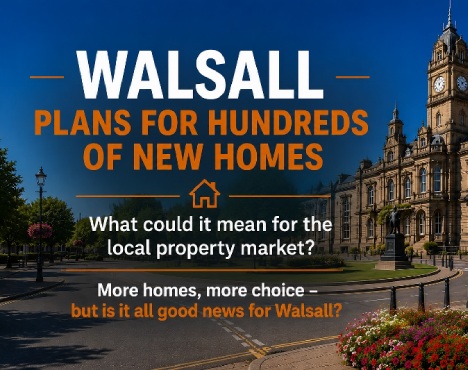
Plans for hundreds of additional homes across the Walsall borough have been revealed as part of the latest changes to the area’s
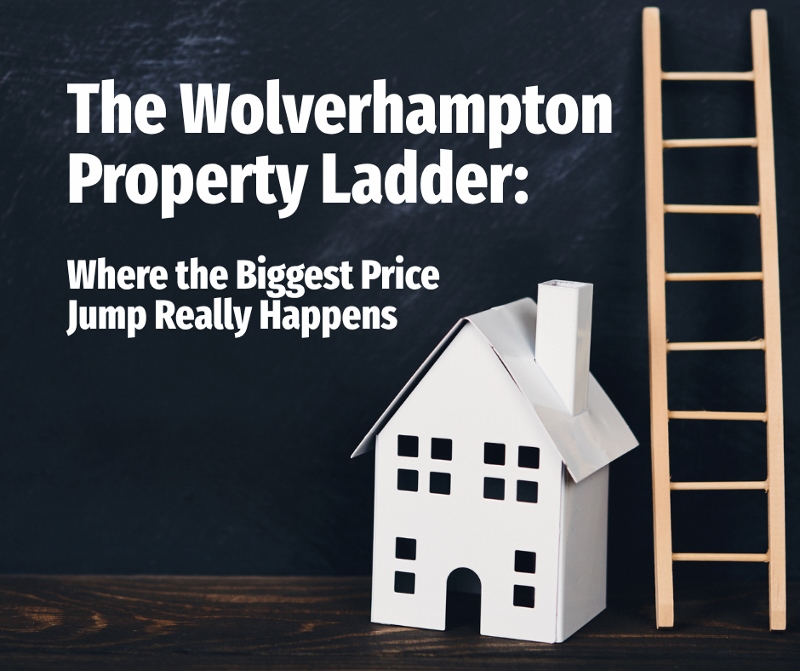
Where the Biggest Price Jump Really Happens We often talk about the average price of a home in Wolverhampton, but that single

Thinking about selling your home this autumn? You don’t necessarily need to wait until the leaves start falling before making a move.